Volume 1 Issue 2
March, 2008

BIOMEDICAL OPTICS NEWS & ANALYSIS

May 16, 2008 -- Toshiba Imaging Systems Division is partnering with Olympus Canada to offer a new tool for clinical pathology and teaching, the High Definition Synergy-HD Microscope Imaging System. It includes a hi-def, wide screen 42" or 47" 1080p LCD monitor and promises true-color video in real time, displaying the entire slide at all ROIs and magnifications without artifacting.
May 15, 2008 -- Dental laser company Zap Lasers has unveiled what it calls "a breakthrough in soft-tissue management." The Styla MicroLaser combines a wireless, cordless design with diode laser technology in a self-contained unit measuring 6.9 inches and weighing 1.9 ounces. More...
May 14, 2008 -- The U.S. Food and Drug Administration approved has approved eye care company Advanced Medical Optics' (AMO) iFS Advanced Femtosecond Laser for use in vision correction surgery. The laser is part of the company's iLASIK technology suite. AMO says the iFS will speed laser vision procedures and enhance ergonomics for surgeons.
May 12, 2008 -- CyDen Ltd., a medical devices company that helped pioneer intense pulsed light (IPL) technology, has received a significant capital investment from Unilever Ventures as part of a £2.8 million Series C investment round. In addition, Spa and Salon International (SSI) has selected CyDen's iPulse product to offer treatments for hair reduction, acne, skin blemishes, pigmentation, anti-aging and wrinkle reduction in its salons.
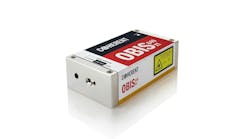
Red laser diode
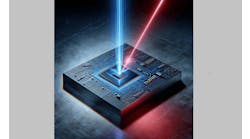
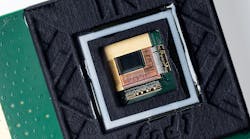
Opnext (Tokyo, Japan and San Jose, CA) has introduced the HL7001/7002MG laser diode for use in medical applications such as blood analysis and endoscopy. The small size of the 705 nm wavelength band laser diode reduces the size of current biomedical measurement equipment while improving the quality of existing medical device applications. The infrared laser diode has a high optical output power, high reliability and the low operating current necessary for medical applications.
Opnext
LASER-TISSUE INTERACTION: Endogenous chromophores alter plasma formation during microsurgery
Laser surgery has been around for so many years it is surprising to find there are still fundamental tissue-interaction studies that have not been performed.
May 9-October 10 2008
New Perio Solutions
St Louis, Portland, Woburn
July 31-August 2 2008
RDH Under One Roof
Chicago, IL
November 5-8 2008
Pankey Gathering of Eagles
Porcelain and Titanium: A Synthesis for Beauty
Miami, FL

FEATURED WEBCASTS

Cambridge Technology, Inc.
State of the Art in CARS Microscopy - Technologies & Applications
Coherent anti-Stokes Raman-scattering (CARS) microscopy has gained a strong following in clinical and biological research circles in recent years, thanks to improvements in detection sensitivity, better understanding of contrast mechanisms, and the development of new laser sources that enable CARS to provide noninvasive 3-D imaging of live cells. Sunney Xie and his research group at Harvard have pioneered the development and application of CARS, which allows imaging of live cells and tissues based on vibrational spectroscopy with high sensitivity. Xie has coauthored over 110 research papers and holds three US patents.

In his hour-long webcast on April 17, Prof. Xie will provide an overview of CARS technology and applications, with particular emphasis on the many advantages this technique brings to tissue imaging, metabolite imaging, and imaging of brain tumors.
State of the Art in CARS Microscopy - Technologies & Applications

Hamamatsu Photonics
Optical Diagnostics: Finding and Fighting Cancer
Cancer is the leading cause of death from disease in the United States and other developed countries. The top five cancers in terms of annual deaths are (in order) lung, colon, breast, prostate, and pancreas. In each case, it has been demonstrated time and again that the key to reducing deaths from these cancers is earlier detection and treatment than what is currently possible with conventional diagnostic technologies and techniques.

Biomedical engineers and researchers worldwide are working to provide doctors with new and improved means for imaging suspicious lesions and determining tissue characteristics without the need for invasive surgical biopsy procedures. High-resolution, noninvasive imaging techniques involving lasers, LEDs, detectors, fibers, endoscopes, and related optical components are increasingly being used to enhance the diagnosis of cancer, eliminating the need for surgical tissue removal and the often days-long wait for lab results that can accompany physical biopsies. More important, these technologies should dramatically improve the ability to detect, diagnose, and monitor skin, brain, breast, lung, prostate, and other cancers.
Optical Diagnostics: Finding and Fighting Cancer

ad