BIOMEDICAL OPTICS NEWS & ANALYSIS

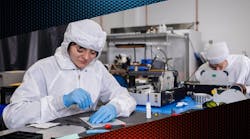
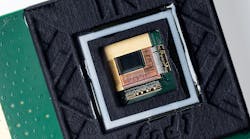
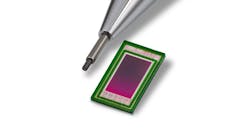
JULY 3, 2009--SensiVida Medical Technologies, Inc. (Henrietta, NY) says it has received clearance from the Western Institutional Review Board (WIRB; Olympia, WA), to begin clinical trials of its minimally invasive allergy test system. The microsystems-based optical technology promises to automate bio-sensing and data acquisition while minimizing patient discomfort. The platform targets other applications too, including glucose and cholesterol monitoring, and blood coagulation and TB testing.
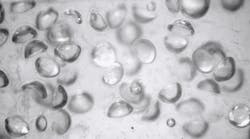
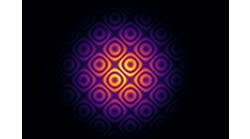
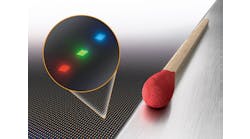
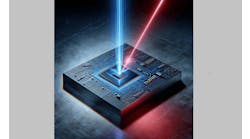
JULY 2, 2009--A new type of optical trap (optical tweezers) that enables on-chip manipulation of bacteria, viruses and other particles has the potential to create smaller, cheaper versions of the sophisticated equipment used to perform fluorescence-activated cell sorting (FACS). The trap is part of an integrated optofluidic platform; researchers at the University of California, Santa Cruz (UCSC) created it while working to devise new sensor technology for biomedical analysis.
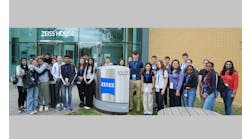
JULY 1, 2009--Carl Zeiss MicroImaging GmbH (Jena, Germany) plans to launch a new high-resolution microscopy product line by the end of this year, to enable biomedical scientists to examine objects at maximum resolution. The new systems will combine high resolution structured illumination microscopy (HR-SIM) and photoactivated localization microscopy (PALM) to enable "new approaches and experiments in all disciplines of biomedical research," according to president and CEO Ulrich Simon.
JUNE 30, 2009--A research team at the University of Nebraska-Lincoln has figured out a possible way to observe and record the behavior of matter at the molecular level. Working with Nobel laureate Ahmed Zewail of the California Institute of Technology (Pasadena, CA), they developed mathematical models to show that laser beams create ultra-high-speed "temporal lenses" that would be capable of making "movies" of molecular processes for biomedical research and other applications.
  BioOptics   NYSE   Nasdaq  
     627.97 -641.42 (-50.53%)
     5775.24 -178.77 (-3.00%)
     1796.52 -49.20 (-2.67%)
  Index Last Change (%)
     BioOptics 627.97 -641.42 (-50.53%)
     NYSE 5775.24 -178.77 (-3.00%)
     Nasdaq 1796.52 -49.20 (-2.67%)
     S&P 500 896.42 -26.91 (-2.91%)
Quotes delayed at least 20 mins.
Get Quote
Raman imaging spectrographs from SPECIM
Spectral Imaging Ltd.'s (SPECIM, Oulu, Finland) ImSpector Enhanced high-resolution imaging Raman spectrographs promise high light throughput, distortion free performance, and polarization-free optical design--along with a small device footprint, good image quality, and high spectral resolution.

Welcome to BioOptics World Video, where you'll find an ever-expanding collection of video clips to augment our written news reports, special features, and other articles. Provided by both BioOptics World as well as contributing scientists and companies, you'll find here an array of clips covering design, development, and utilization of optical technologies for the study, diagnosis, and treatment of disease and disease processes. Our coverage includes all types of biomedical optics and biophotonics: medical and surgical lasers for dermatology, eye, and vision correction; tools for photodynamic therapy; microscopy, spectroscopy, and optical coherence tomography; optical imaging; and more. If you would like to submit a video for consideration, please send it to barbarag@pennwell.com.
July 29-31 2009
RDH UnderOneRoof
Las Vegas, NV
October 22-23 2009
RDH Event
November 12-13 2009
DDS Tech Fair
Barbara Goode
by Barbara Goode
Editor in Chief

Urodynamix's financial report indicates demand for NIRS technology

This week, Urodynamix Technologies Ltd. reported exciting news: Financial results for its fiscal first quarter (ended March 31) showed a 1,269%increase from revenues in Q1 2008. The spike resulted from the first commercial sales of the company's URO NIRS 2000 in the quarter--and as of March 31, the company had an order backlog of $92,576.

XMLRSS
Carl Zeiss
New Directions in Laser Microdissection: Systems and Applications
Laser microdissection (LM, a.k.a laser capture microdissection, LCM) is a powerful biomedical research tool, allowing for the procurement of specific cell populations from tissue samples. Depending on the tissue sample preparation, biomolecules such as DNA, RNA and proteins can be extracted from the microdissected cells and then analyzed for molecular profiling studies.

LM was invented at the National Institutes of Health in 1996 by a multidisciplinary team that included pathologists, molecular researchers, engineers and physicists. Since then, the bio research market has witnessed variations in system design including types and uses of lasers, systems for sample collection, and digital image analysis that allows for a semi-automatic cell targeting and microdissection.

In this live, interactive webcast presentation, Jeffrey Hanson, a biomedical engineer, and Jaime Rodriguez, pathologist -- both at the Laser Microdissection Core at NIH -- will present general aspects on the design of laser microdissection systems and some examples of how this technology is helping to advance biomedical research. In particular, they will demonstrate its application to cancer research and tumor microenvironment.
New Directions in Laser Microdissection: Systems and Applications

Carl Zeiss
Success with Advanced Microscopy
In this dynamic, interactive presentation, Professor John Girkin of the University of Durham (UK) will discuss and compare the powerful nonlinear optical microscopy methods making their way into life science laboratories around the world, including multiphoton microscopy, second and third harmonic imaging, and CARS microscopy. He will describe practical applications wherein these methods have enabled biological research that was not previously possible.

He will also reveal the techniques' current limits and some of the work being done to overcome these challenges?in particular, ways of imaging more deeply with minimal disruption to the sample. Topics here will include adaptive optics methods, micro-mirror scanning, and miniature optics. The webcast will end with an exploration of where the core technology might go next in its application to real-life science challenges. Dr. Girkin will engage with attendees, answering questions throughout the webcast.
Success with Advanced Microscopy

Hamamatsu Corporation Princeton Instruments
Key Secrets of Biospectroscopy
As biomedical researchers and clinicians continue to look for better ways to analyze complex processes, spectroscopy becomes an increasingly useful tool -- and this webcast will demonstrate why. Spectroscopy underpins many of the most promising approaches to early cancer diagnosis, drug development, and other critical life sciences applications -- as well as noninvasive alternatives to traditional methods of detecting various medical conditions. The discussion will explore key spectroscopic methods (including Raman, near infrared, and more) and technologies involved in detecting cellular and sub-cellular changes that indicate disease and guide treatment.
Key Secrets of Biospectroscopy

ad